

Pakistan will remember 2025 for a couple of reasons. One, and most pivotal of them, is water, and not because of a single catastrophic event, but because multiple hydrological, political, and climatic crises converged simultaneously, dismantling the long-held assumption that water management is merely a technical or seasonal concern.
Throughout the year, water moved decisively into the realm of national security, federal cohesion, public health, and regional diplomacy.
Pakistan entered 2025 with a drier-than-average winter, slid rapidly into one of the most severe heatwave seasons on record, endured compound monsoon disasters, and concluded the year facing unprecedented transboundary water hostility on both its eastern and western borders.
The challenges, however, were not just external. Internally, long-standing inter-provincial distrust over water allocation erupted into mass protests, as Sindh confronted an existential crisis spanning agriculture, access to drinking water, coastal survival, and deteriorating infrastructure.
Below, we take a closer look at all that unfolded this year to make 2025 a turning point in Pakistan’s water history.
Transboundary hydropolitics
The Indus Waters Treaty shock
Historically, the Indus Water Treaty, forged by an unlikely alliance of world powers in 1960, withstood over six decades, survived wars, and braved diplomatic crises, serving as a stunning example of international cooperation.
All of that, however, collapsed in 2025, when on April 23, India formally placed the treaty in abeyance following the Pahalgam attack. The immediate consequence was not the physical diversion of river flows, but the suspension of hydrological data sharing, which is an essential pillar for flood forecasting, reservoir operations, and irrigation planning in downstream Pakistan.
The loss of advanced flow information during an exceptionally volatile monsoon season sharply increased downstream flood risk and operational uncertainty. Although Pakistan managed information through alternative national and international sources, India’s posture in water diplomacy appeared increasingly irresponsible, signalling an attempt to weaponise water.
This weaponisation of water and consistent threats were met with an appropriate and timely response from Pakistan, which involved declaring any unilateral diversion of western rivers an act of war and marking an unprecedented securitisation of water. Although international arbitration processes continued and interpretative rulings were issued later in the year, the treaty’s normative authority was thoroughly weakened.
The western frontier: Afghanistan and the Kunar River
While attention remained fixed on India, a quieter but equally destabilising hydrological threat emerged on Pakistan’s western frontier. In October 2025, the Taliban administration ordered the immediate construction of a major dam on the Kunar River, a tributary that provides the bulk of the flow to the Kabul River system, sustaining large parts of Khyber Pakhtunkhwa.
In the absence of a formal water-sharing treaty between Pakistan and Afghanistan, bilateral water relations rely on customary practices that are now under visible strain. Few voices in Pakistan called for the counter-diversion of the Chitral River, signalling how water infrastructure has begun to function as a strategic instrument in an increasingly volatile regional landscape.
Inter-provincial water governance
Domestically, 2025 exposed the fragility of Pakistan’s federal water compact. The launch of the Green Pakistan Initiative, aimed at converting millions of acres of land into corporate farmland through new irrigation canals, triggered the most intense inter-provincial water conflict in decades. The proposed Cholistan Canal became the central flashpoint.
Sindh’s opposition was grounded in hydrological reality: there is no demonstrable surplus water in the Indus system capable of sustaining new large-scale irrigation without reducing downstream flows. Political leaders, farmers, lawyers, and civil society framed the project as a violation of the 1991 Water Apportionment Accord and a direct threat to Sindh’s agriculture and the already collapsing Indus Delta.
Mass protests, highway blockades, and resolutions passed in the Sindh Assembly reflected a rare province-wide consensus that upstream water diversion had become an existential issue.
Faced with escalating unrest, the federal government halted canal construction in late April, a decision later formalised by the Council of Common Interests (CCI). The body returned provisional approvals and directed that no new canal could proceed without full provincial consensus.
While this intervention reaffirmed constitutional federalism, it did not eliminate underlying structural tensions. Corporate agriculture remains a federal priority, while inter-provincial trust remains deeply eroded. Even technically successful reservoir management later in the year could not fully restore confidence in allocation mechanisms.
From climatic extremes to systemic failures
And then came the floods, one of the most consequential hydrological events since 2022, not because of the physical damage they caused but because they exposed systematic failures in water governance, infrastructure planning, and disaster preparedness.
Unlike a single flood pulse, 2025 witnessed a sequence of high-intensity rainfall events, sudden upstream releases, massive landslides and urban drainage collapse, producing cascading flood risks.
The monsoon began earlier than average in late June and extended deep into September, marked by intense cloudburst events. On July 17, Rawalpindi received approximately 230 millimetres of rainfall within 24 hours, overwhelming drainage systems and inundating urban settlements. Similar flash flooding occurred across KP and northern Punjab, where steep catchments rapidly converted rainfall into destructive flows.
Riverine flooding followed as exceptional rainfall in the upper Indus Basin coincided with reduced predictability in upstream releases. In late August, sudden discharges — particularly on the Ravi, Sutlej, and Chenab rivers — combined with local rainfall to inundate large tracts of Punjab. Satellite analysis later confirmed that more than 1.3 million hectares of farmland were submerged, severely damaging rice, cotton, and sugarcane crops.
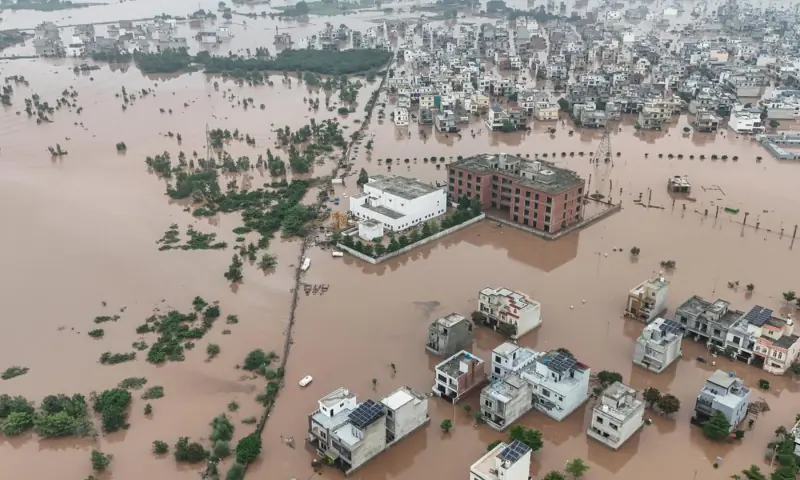
Sindh, on the other hand, experienced a different flood dynamic. After entering the year under drought conditions, the province faced rapid river swelling at Guddu and Sukkur barrages. Emergency discharges forced evacuations of around 150,000 people from vulnerable riverine areas, illustrating the absence of adaptive operational management under extreme variability.
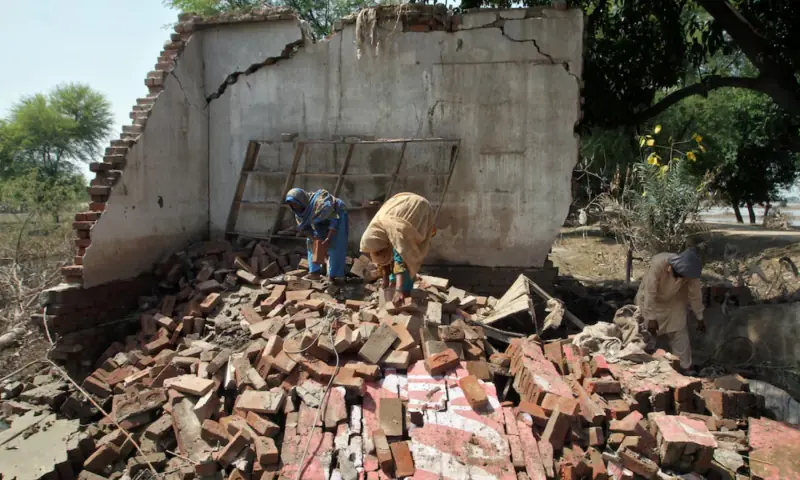
Nationwide, the floods claimed over 1,000 lives, displaced more than six million people, and damaged critical infrastructure. The economic impact was severe, with flood-related disruptions shaving an estimated 0.5 per cent off national GDP. Beyond immediate destruction, floodwaters mobilised sewage, industrial effluents, and agro-chemicals, contaminating drinking water sources and triggering post-flood disease outbreaks.
The overarching lesson was stark: floods in Pakistan are no longer episodic natural disasters but systemic stress tests, exposing the same governance failures with increasing intensity.
Droughts to floods
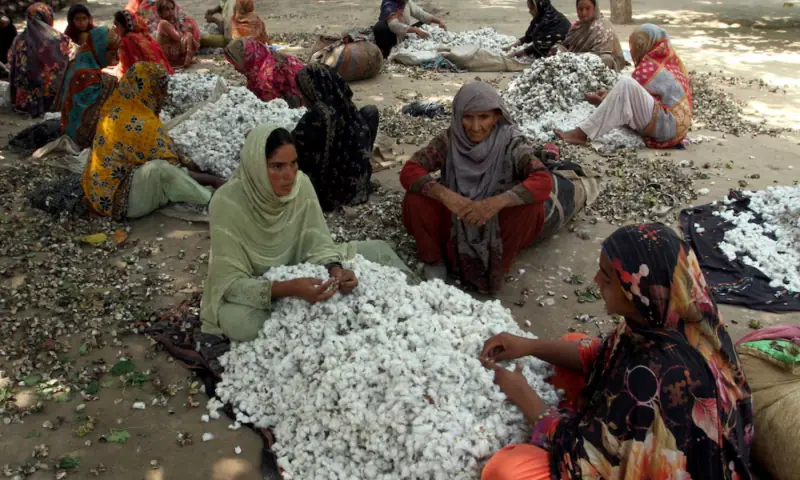
Sindh embodied the contradictions of 2025 more acutely than any other province. Early Kharif water shortages, now a recurring feature, once again reduced cotton sowing and devastated mango orchards at critical growth stages.
As the year progressed, the irrigation crisis morphed into a public health emergency. In rural areas, women and children travelled long distances to collect saline and contaminated water. In cities, reliance on water tankers surged beyond affordability. Only about a quarter of Sindh’s population had access to safely managed drinking water, while water-borne diseases increased silently.
Meanwhile, the Indus Delta continued its slow collapse. Insufficient freshwater flows below Kotri accelerated seawater intrusion, rendering fertile land unproductive and displacing more than 1.2 million people over the past two decades. Mangrove loss, collapse of fisheries, and salinisation transformed large areas into ecological dead zones, fuelling migration toward already overstressed cities.
It increasingly appears that the delta no longer belongs to anyone. Even in 2025, when relatively improved flows reached the delta, voices emerged claiming that water had been “wasted” by flowing to the sea — an outlook that is anti-river, anti-resilience, anti-sustainability, and ultimately anti-people.
At the same time, investigations into Sukkur Barrage gate failures exposed years of deferred maintenance. Fortunately, a major rehabilitation and modernisation project was already underway. Even with the progress in 2025, the system remains under significant stress.
In Karachi, the K-IV project reached only 64pc completion despite massive expenditure, while demand continued to exceed supply by nearly 550 MGD. Moreover, serious questions remain about whether the project’s design and execution will translate into the intended outcomes.
The question of water governance
Earlier this month, the Asian Water Development Outlook (AWDO), released by the Asian Development Bank, brought yet another water reality to the fore.
The report placed Pakistan near the bottom of regional water security rankings, underscoring that the country’s water crisis stems less from absolute scarcity and more from persistent governance failure. Assessing 50 economies across rural, urban, economic, environmental, and disaster dimensions, the document showed that Pakistan’s National Water Security Index improved by only 6.4 points between 2013 and 2025 — below the regional average and far behind neighbours such as India, Bangladesh, Nepal, and Sri Lanka.
Rural water security remains in the second-lowest tier, marked by poor water quality, limited piped supply, sanitation deficits, and a high burden of water-borne disease, reflecting weak integration of WASH into climate adaptation.
Urban water security is even more alarming: despite marginal gains, Pakistan’s urban drainage score fell to zero, highlighting chronic flooding, unplanned expansion, and infrastructural decay, exemplified by Karachi’s persistent supply deficits and informal tanker economy. Economic water security stagnated, while environmental water security deteriorated most visibly in the shrinking Indus Delta.
Taken together, these findings reinforce the central lesson of 2025: Pakistan’s water crisis is no longer defined by scarcity alone, but by the growing unsafety of its water and the inequitable, opaque systems through which it is governed.
10 imperatives for 2026
The lived experience of 2025 leaves little room for ambiguity and yields ten unavoidable priorities for 2026.
First, water must be recognised and governed explicitly as a national security issue that have country level consensus, not merely as a sectoral or engineering concern.
Second, Pakistan must urgently develop a defensive and adaptive approach to transboundary water challenges, one that not just prepares for uncertainty, but also internationally works for basin-level thinking to save the lives, especially those of people belonging to less privileged backgrounds.
Third, inter-provincial water governance must be rebuilt on transparent, publicly accessible data and genuine constitutional consensus, without which technical decisions will continue to provoke political resistance.
Fourth, water quality must be elevated from a neglected environmental concern to a full-fledged public health emergency, integrated into health planning, nutrition outcomes, and productivity assessments. This leads us towards the fifth priority: groundwater — now Pakistan’s primary source of water for households and agriculture — must be governed as a shared public resource instead of an unregulated private commodity.
Sixth, urban water governance, particularly in Karachi, must shift decisively from emergency coping mechanisms toward durable institutional reform, equitable distribution, and accountability.
Seventh, environmental flows to the Indus Delta must be legally guaranteed and treated as essential for human survival, ecological stability, and coastal security, rather than as surplus water.
Eighth, women must be integrated as active decision-makers in water planning and management, recognising their central role beyond the invisible labour of water collection.
And finally, two things that require immediate attention: climate adaptation must be fully mainstreamed into all water planning, replacing reliance on historical averages with scenario-based, flexible, and risk-informed approaches.
And finally, water policy must be anchored in social justice, ensuring that access to safe water is upheld as a fundamental right rather than reduced to a market commodity determined by income and power.
The hydrological turbulence of 2025 was not an anomaly; it was a preview. It revealed what happens when fractured water diplomacy, internal mistrust, decaying infrastructure, and climate volatility collide. Water is no longer a sector to be managed; it is a constraint on Pakistan’s survival. Whether 2026 becomes a year of reform or repetition depends on whether the lessons of 2025 are heeded or willfully ignored.
Header image: A woman and a girl wash themselves as they stand amid flood water, while taking refuge in a camp, following rains and floods during the monsoon season in Sehwan, Sindh. — Reuters/file
from Dawn - Home https://ift.tt/hbLXVm1
via IFTTT





0 Comments