

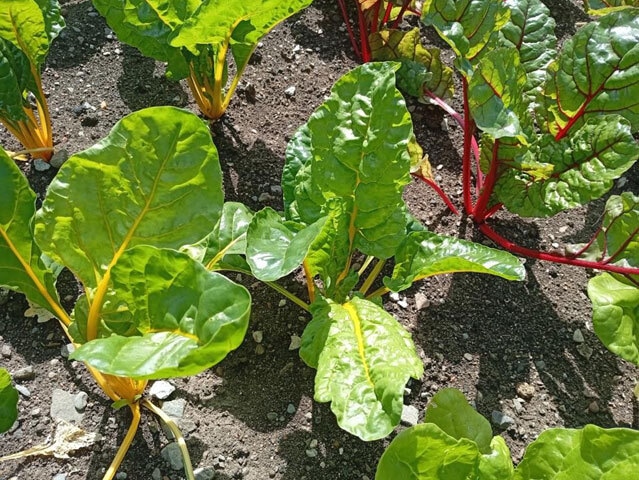
Often referred to as ghaas phoos [grass and straw] in jest, leafy green vegetables are known as a healthy eating option, particularly for those facing weight issues or metabolic disorders such as hypertension and diabetes.
Swiss chard, with its rich nutritious profile, is no exception. Its leaves are rich in vitamins A, C, E and K. Minerals such as magnesium, manganese, potassium, copper and iron contribute to its nutrient density. The consumption of Swiss chard provides considerable quantities of proteins, fibres and carbohydrates along with minimal calories, making it one of the best solutions to manage weight.
Quercetin, an antioxidant present in Swiss chard, may have anti-cancer properties. The vegetable is also beneficial in diabetes management and keeps bones, heart and eyes in good shape.
However, individuals with pre-existing medical conditions need to exercise caution while consuming it. Individuals on blood-thinning medications should consume Swiss chard judiciously due to its vitamin K content. The high oxalate content of Swiss chard can also cause kidney stones in prone individuals. Even with the widespread belief that boiling Swiss chard and removing the water reduces its oxalate content, prone individuals should still eat it in moderation and consult with their physician regularly.
Swiss chard’s vibrant stems — in red, yellow and white — make it one of the most visually striking vegetables you can grow
Given these nutritional benefits, Swiss chard is worth growing at home. Here’s how to cultivate it successfully.
Swiss chard seeds, ranging from brown to dark brown, are available in “rainbow” mixes, containing red, yellow and white-stemmed varieties, often called Bright Lights. These colours refer to the stem and mid rib of the leaves. Some growers mix different-coloured varieties when planting.
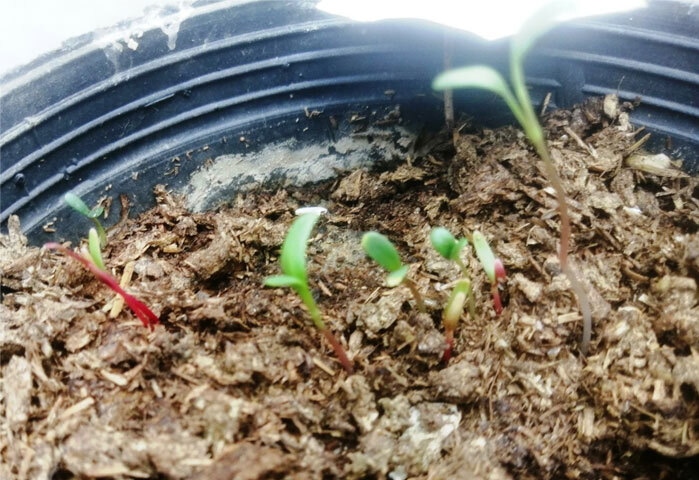
In favourable conditions, the irregular, spinach-like seeds of Swiss chard are likely to sprout within one week to 10 days of sowing. Usually, one seed ball of Swiss chard has three to four seedlings growing out of it. With care, a seasoned gardener can separate the seedlings. An easier way, called thinning, is to remove relatively weaker seedlings and retain the strongest of the three to four seedlings.
Initially, the seedling sprouts cotyledon leaves, which are distinct from Swiss chard leaves. The two cotyledon leaves are very thin, as shown in the photograph, without any mid ribs. They have a smooth texture and are oval-shaped. These leaves usually emerge at the beginning of the seed-sprouting phase, to provide the initial energy boost to the nascent seedling.
At this stage, the seedling tray or the potting vessel should be exposed to three to five hours of early morning sunlight. The watering schedule should be adjusted to ensure that the sunlight-exposed soil surface remains moist, and not wet, throughout the day.
The seedlings are extremely lanky at this stage and should be covered to protect them from birds. This can be done using a green net or installing mirrors to reflect sunlight.
The first true leaf of Swiss chard is likely to appear in about 10 days after planting. Once it has sprouted three to four leaves, the seedling should be transplanted at its permanent location. This may take anywhere between three weeks to one month. During this process, the sturdiness of the sapling’s stem also increases and the sapling reaches three to four inches in height.

It is critical to transplant the sapling exactly at this stage as deviation — either too early or too late — can result in transplantation shock to the plant. Usually, the pot should be at least 11 to 13 inches in width and height. When planting in open ground, space saplings at least eight to 10 inches apart.
One of the drawbacks of growing Swiss chard in pots is that the leaf is smaller than those from plants grown in the ground. Plant growth in pots is also slower.
Please send your queries and emails to *doctree101@hotmail.com. The writer is a physician and a host for the YouTube channel ‘DocTree Gardening’ promoting organic kitchen gardening*
Published in Dawn, EOS, February 8th, 2026
from Dawn - Home https://ift.tt/abxPHtB
via IFTTT




0 Comments